Water Leak Detection in Taylors SC | Pinpoint Diagnostic Testing
Non-invasive electronic acoustic leak detection, thermal imaging, and pressure diagnostics pinpointing hidden water leaks behind walls, under slabs, and in crawlspaces.
Direct Field Dispatch Desk
Connect directly with our local response crew serving Taylors and Greenville County. No automated runaround.
(512) 764-6825Connecting Homeowners with Qualified Local Service Contractors
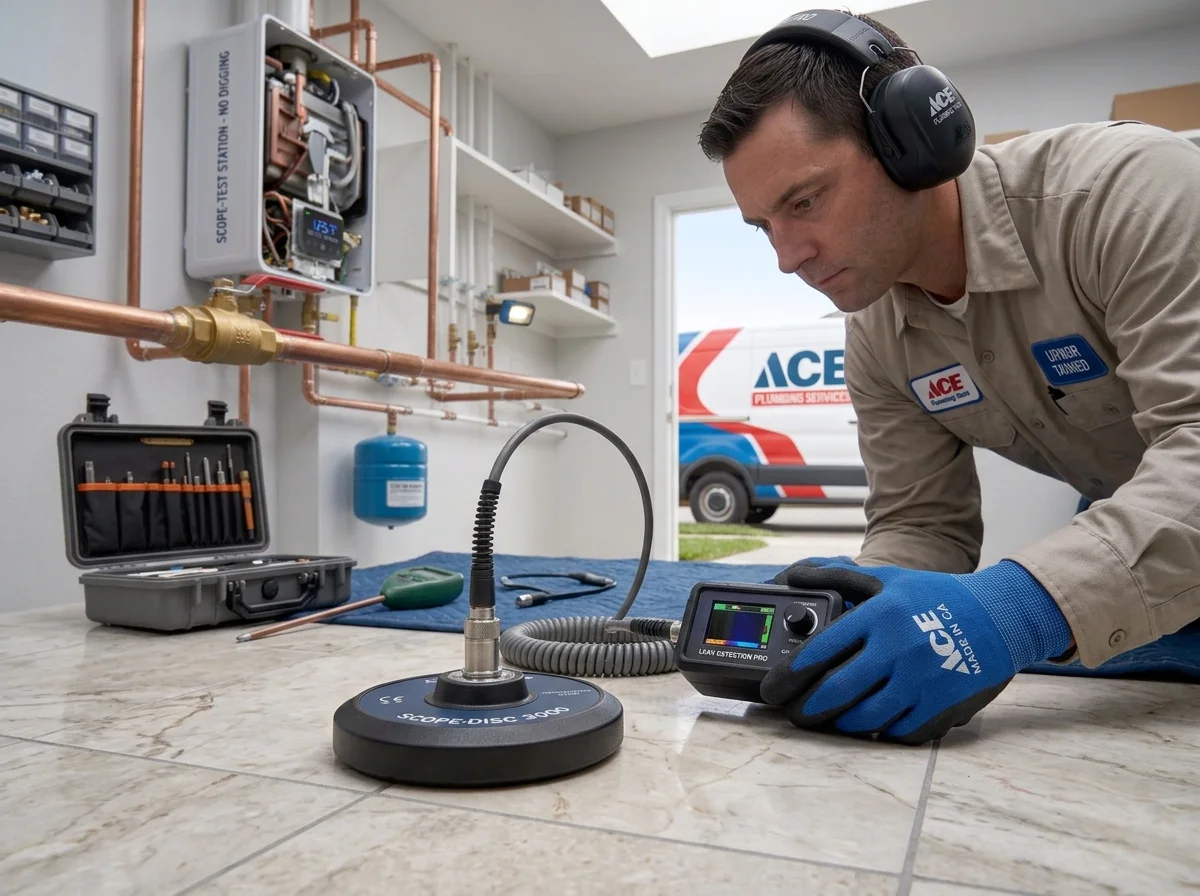
Non-invasive electronic water leak detection services across Taylors, SC (ZIP 29687). Technicians utilize acoustic sensors and infrared thermography to isolate hidden water leaks.
Pinpoint accuracy eliminates unnecessary demolition of drywall, flooring, or concrete slabs. Clear written estimates provided before repairs commence.
Non-Invasive Water Leak Detection Across Taylors, SC
A concealed water leak inside a framed wall, above a finished ceiling, or buried beneath a concrete foundation slab is among the most insidious threats a property owner can encounter. As part of our comprehensive plumbing services catalog, our partner technicians deliver advanced, non-invasive water leak detection services for homeowners and commercial businesses across Taylors, South Carolina and Greenville County.
Water leaks rarely begin with dramatic geysers. More often, they manifest as microscopic pinhole ruptures in pressurized copper lines, failing compression fittings, or hairline cracks in plastic pipes. Because water follows the path of least resistance through building framing and insulation, the physical spot where dampness appears on your drywall or carpet is often 10 to 20 feet away from the actual source of the leak.
Traditional contractors often respond to mysterious moisture with destructive exploratory demolition—cutting holes in drywall, tearing up hardwood flooring, and jackhammering concrete based on speculation. At plumbertaylors.com, our partner specialists take an empirical, high-technology diagnostic approach.
Using industrial acoustic ground microphones, correlation sensors, line tracers, and high-resolution thermal imaging cameras, technicians pinpoint the exact three-dimensional coordinate of the leak without unnecessary damage to your home.
Whether you suspect a sub-slab leak in Pebble Creek, an uninsulated pipe weeping inside a crawlspace in Brushy Creek, or an aging commercial water service line along Wade Hampton Boulevard (US-29), our technicians isolate the leak quickly. Contact our dispatch desk today at (512) 764-6825 to schedule an on-site diagnostic survey.
┌────────────────────────────────────────────────────────────────────────┐
│                   SIGNS YOU HAVE A HIDDEN WATER LEAK                   │
├────────────────────────────┬───────────────────────────────────────────┤
│ Symptom Observed           │ Diagnostic Implication                   │
├────────────────────────────┼───────────────────────────────────────────┤
│ Spiking Water Bill         │ Continuous pressurized leak running 24/7  │
│ Running Water Sounds       │ Pressurized supply pipe weeping in walls  │
│ Warm Spots on Flooring     │ Hot water line ruptured beneath concrete  │
│ Peeling Paint or Wallpaper │ Moisture traveling through drywall framing│
│ Musty Mildew Odors         │ Concealed water pooling in crawlspaces    │
└────────────────────────────┴───────────────────────────────────────────┘
The Technology: How Non-Invasive Leak Detection Works
Modern leak detection relies on physics, acoustic wave propagation, and infrared thermography to reveal hidden moisture:
┌────────────────────────────────────────────────────────────────────────┐
│                   LEAK DETECTION INSTRUMENTATION                       │
├────────────────────────────┬───────────────────────────────────────────┤
│ Diagnostic Instrument      │ Operational Methodology and Use Case     │
├────────────────────────────┼───────────────────────────────────────────┤
│ Acoustic Ground Microphone │ Listens to high-frequency pressurized hiss│
│ Infrared Thermal Camera    │ Visualizes thermal anomalies and cold/hot │
│ Digital Pipe Tracer        │ Maps exact routing of underground lines   │
│ Helium Gas Sniffer         │ Detects escaping tracer gas through slab  │
│ Moisture Meter Sensors     │ Measures moisture percentage inside walls │
└────────────────────────────┴───────────────────────────────────────────┘
1. Ultrasonic Acoustic Listening Microphones
When municipal water pressurized at 50 to 80 PSI escapes from a pinhole puncture, the physical turbulence generates a distinct high-frequency acoustic hiss. Our technicians utilize sensitive ground listening discs and acoustic microphones equipped with digital sound filters.
The technician sweeps the floor surface with the sensor. Digital filters isolate and amplify the leak frequency while screening out background ambient noises like street traffic or refrigerators. As the sensor nears the leak, signal amplitude peaks, pinpointing the rupture coordinate within a few inches.
2. High-Resolution Infrared Thermal Imaging
Water alters the thermal conductivity of building materials. An infrared thermal camera detects subtle surface temperature differences, displaying them on a color-coded digital screen.
When inspecting hot water supply lines, a sub-slab leak radiates outward as an expanding orange and red thermal bloom. For cold water leaks or damp crawlspaces, the camera highlights blue and purple thermal footprints where evaporation cools the drywall or subflooring.
3. Trace Gas Sniffing (For Complex Sub-Slab Leaks)
For deeply buried lines or complex commercial foundations, technicians isolate the plumbing line, drain remaining water, and charge the pipe with an inert, non-toxic gas mixture (such as 95% nitrogen and 5% hydrogen). Hydrogen molecules are smaller than water molecules and migrate straight upward through concrete and flooring. The technician scans the floor with an electronic hydrogen sensor that alerts immediately when the gas breaches the surface.
Comparison: Non-Invasive Electronic Detection vs. Exploratory Demolition
| Diagnostic Metric | Non-Invasive Electronic Leak Detection | Traditional Exploratory Demolition |
|---|---|---|
| Accuracy of Location | Within 2 to 4 inches of the actual rupture | Hit-or-miss guessing based on surface dampness |
| Damage to Home Interiors | Zero holes cut; completely non-destructive | Large sections of drywall and flooring ripped out |
| Testing Duration | 1 to 2 hours for comprehensive diagnostic | Multi-day project involving demo and cleanup |
| Structural Integrity Risk | Zero risk to building framing or foundations | Jackhammering risks cracking sound concrete |
| Overall Project Expense | Single, modest diagnostic investment | Massive repair bills for carpentry and flooring |
Why Taylors Homes Experience Hidden Copper Leaks
Concealed water leaks in Upstate South Carolina are driven by specific regional building traditions and water dynamics:
Upstate Water Chemistry and Electrolytic Pitting
Residents in Taylors receive high-quality mountain water supplied by Greenville Water. While this water is exceptionally pure and soft, its low mineral hardness can make it slightly aggressive toward thin-walled Type M copper piping installed in homes built throughout the 1970s, 1980s, and 1990s.
Over time, electrolytic reactions and trace dissolved oxygen create microscopic pitting along the bottom of copper pipes. Eventually, a pit penetrates the copper wall, producing a high-pressure pinhole leak.
Expansive Piedmont Red Clay and Slab Movement
Homes built on monolithic concrete slabs in neighborhoods like Pebble Creek often feature copper supply lines encased in sand beneath the concrete. As Piedmont Pacolet red clay swells during wet seasons and shrinks during dry spells, the foundation slab experiences microscopic settling.
This movement causes buried copper pipes to rub against sharp aggregate rocks in the concrete, wearing through the metal wall until a pressurized leak erupts beneath the floor. Learn more about foundation repairs on our slab leak repair page.
The 4-Step Water Leak Detection Workflow
┌────────────────────────────────────────────────────────────────────────┐
│                   OUR 4-STEP LEAK DETECTION METHODOLOGY                │
├────────────────────────────┬───────────────────────────────────────────┤
│ STEP 01: Water Meter Testing and System Pressure Isolation             │
│ STEP 02: Thermal Imaging and Acoustic Frequency Mapping               │
│ STEP 03: Pinpoint Surface Location and Defect Identification           │
│ STEP 04: Presentation of Clear Written Repair Estimate and Options    │
└────────────────────────────┴───────────────────────────────────────────┘
- Step 01: Pressure Isolation: The technician shuts off all indoor fixtures and inspects the Greenville Water meter dial. If the low-flow indicator triangle is spinning, water is actively escaping. The technician isolates indoor and outdoor branch lines to determine which zone contains the leak.
- Step 02: Electronic Scanning: Using acoustic listening sensors and infrared cameras, the technician traces the pressurized pipe path across floors, inside walls, or throughout crawlspaces.
- Step 03: Pinpoint Location: The technician marks the exact location of the leak on the surface with non-permanent tape or marking paint, eliminating guesswork.
- Step 04: Clear Upfront Estimate: The technician explains their findings and provides an itemized written estimate detailing repair options, ranging from localized pipe repair to overhead PEX-A repiping.
For detailed diagnostic pricing and budgeting data, explore our comprehensive Slab Leak Detection Guide for Taylors SC.
Clear Written Project Estimates
At plumbertaylors.com, we operate under a strict clear pricing philosophy. When dealing with a hidden water leak, the last thing you need is a contractor who charges ambiguous hourly rates or begins tearing open walls without your authorization.
Dispatched specialists provide an itemized written estimate for both the diagnostic detection and the recommended physical repair before turning a single wrench. You retain full control over your property with total financial clarity.
Schedule Precision Leak Detection in Taylors Today
Do not allow a hidden water leak to silently damage your home framing, warp expensive flooring, or inflate your municipal water bills. Pinpoint the leak with non-invasive acoustic technology.
Contact our central dispatch desk today by calling (512) 764-6825 to speak directly with an intake coordinator, or navigate to our interactive contact page to request an on-site diagnostic appointment. Let our experienced Upstate specialists protect your property with precision leak detection.
Our 4-Step Plumbing Service Methodology
Engineered to guarantee punctuality, upfront financial clarity, and South Carolina code compliance.
Discovery and Dispatch
Direct telephone intake with our dispatch coordinator to log symptoms, evaluate water damage risks, and route the nearest field technician in Taylors.
On-Site Diagnostic
Comprehensive physical, video camera, or acoustic diagnostic testing of your plumbing system to pinpoint root failure causes without guesswork.
Clear Upfront Estimate
We explain our findings and provide a transparent, itemized written estimate for your approval before starting any physical plumbing repairs.
Certified Execution
Precision execution using commercial-grade parts, adherence to South Carolina plumbing codes, thorough cleanup, and operational sign-off.
Frequently Asked Questions
Common questions regarding Water Leak Detection in Taylors SC | Pinpoint Diagnostic Testing in Taylors and Greenville County.
How do technicians locate water leaks hidden behind walls or under concrete slabs?
What are the most common signs of a hidden water leak?
Can a small pinhole water leak really cause severe structural damage?
Does homeowner insurance cover the cost of professional leak detection?
Speak Directly With Our Field Dispatch Desk
Connect immediately with our local response crew for prompt dispatch, clear written estimates, and South Carolina code compliance.